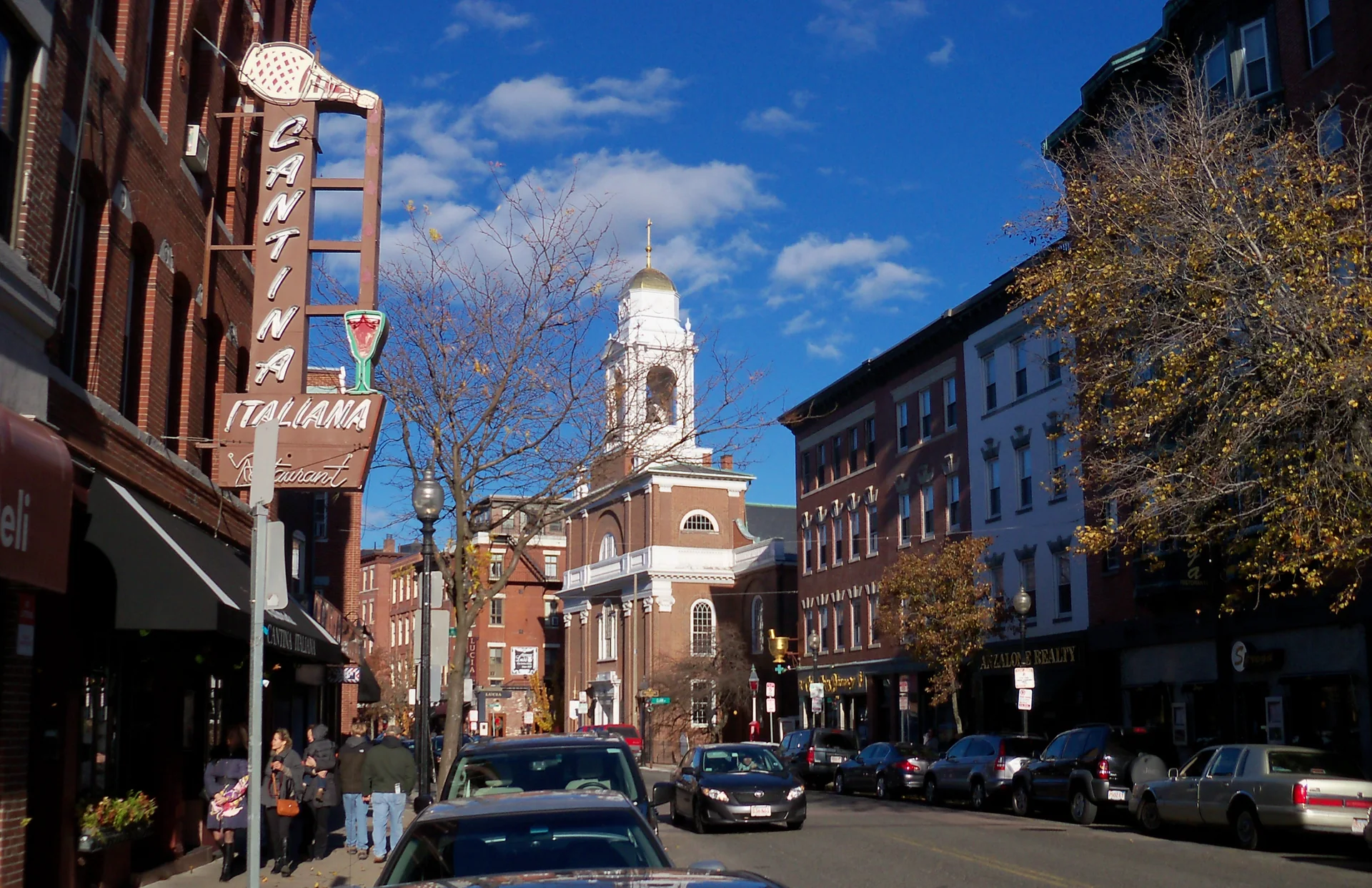
The North End is often part of a Boston visitor’s first itinerary, yet it works best as more than a stop between historic sites. Its streets contain restaurants, homes, shops and places with long histories. Approach it as a neighborhood where people live and work, not an attraction that has been set aside for visitors.
Let the streets set the pace
Hanover Street provides one recognizable starting point. From there, use a map to understand where you are heading rather than following a crowd without a plan. Side streets can offer a quieter change of scale, but narrow pavements and residential doors call for consideration.
Pause where there is room. Keep entrances clear, move aside before checking directions, and ask before taking a close photograph of a person or the interior of a business.
Connect history with context
The Freedom Trail passes through the North End on its route between Downtown and Charlestown. The National Park Service provides context for its sites and the broader history of the city. A red line on the pavement is useful orientation, but it is not a substitute for understanding what a place represents.
Boston’s historical story is larger than a single route. Give time elsewhere in the city to Black heritage, immigrant communities and contemporary cultural life rather than expecting one neighborhood walk to explain everything.
Choose a food stop with attention
Menus, queues and busy periods change. Look at the current menu, tell staff about dietary requirements and choose a place that fits the meal you want. A bakery counter and a long restaurant lunch offer different experiences; neither has to be a contest for a supposed “best” title.
- Decide whether you want a quick pause or a seated meal.
- Check the ordering arrangement before joining a queue.
- Keep takeaway packaging with you until you find an appropriate bin.
- Make room for staff and other customers in small spaces.
Continue toward the water, or stop here
A waterfront continuation can provide a welcome change after close streets. Check your route and energy before adding it, especially if you have another booking. There is no need to finish every nearby sight in one outing.
For historical background, consult Boston National Historical Park. For the rest of the day, browse food and drink ideas or compare a guided experience with the pace of an independent walk.